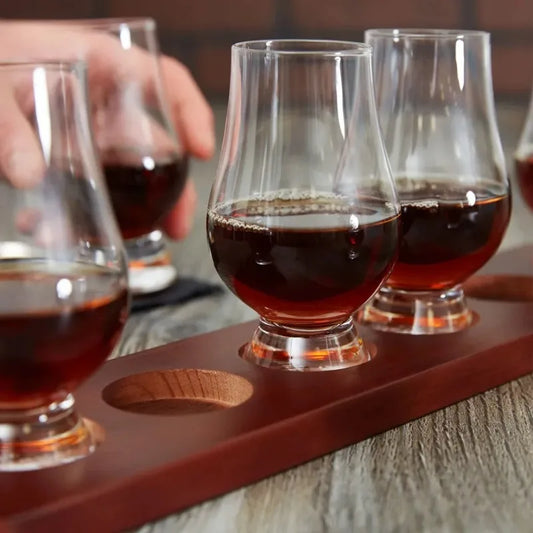
What is a Glencairn glass?
The Glencairn is a short, stemless tasting glass with a wide bowl that tapers to a narrow mouth — the silhouette most people now picture when they imagine "a whiskey glass." It was designed by Glencairn Crystal of East Kilbride, Scotland and launched in 2001, with its shape derived from the nosing copitas long used in Scotch whisky labs and blending rooms. In 2006 it won the Queen's Award for Innovation, and it became the first glass to be endorsed by the Scotch Whisky Association. Today it is used by distilleries across Scotland, Ireland, and the wider whiskey world, with millions sold every year.
The standard glass holds roughly 200 ml (about 6.8 oz) to the brim, which leaves plenty of headroom for a normal one-to-two-ounce dram to breathe and build aroma. It is made from clear glass or lead-free crystal so the whiskey's color shows cleanly under light — an underrated part of judging age and cask.
Why the Glencairn shape works
Every part of the profile does a job. The wide bowl gives the spirit surface area to release its volatile aromatics; the tapering mouth funnels those aromatics into a concentrated column so subtle spice, floral, and fruit notes reach your nose instead of scattering into the room. The thick, solid base keeps your hand away from the bowl so body heat does not prematurely warm the pour, and because there is no stem it survives daily use and a busy sink in a way fragile stemmed glassware does not. The result is a glass refined enough for a formal tasting yet practical enough to drink from every night.
Glencairn vs. other whiskey glasses
The Glencairn is the all-rounder, but it is not the only tasting glass worth owning. Here is how it stacks up against the other shapes you will see recommended for nosing rye and whiskey.
| Glass |
Best for |
How it performs |
Drawback |
| Glencairn |
Everyday nosing & neat sipping |
Tulip bowl concentrates aroma; stemless base is durable and steady |
Less hand-warmth isolation than a stemmed copita |
| Copita |
Formal tastings of delicate drams |
Stemmed tulip keeps hand heat and scent away from the spirit |
More fragile; less practical for daily use |
| Snifter |
Aged brandy; casual swirling |
Very wide bowl, big swirl |
Outsized bowl plus tight rim can pile up harsh ethanol vapor on the nose |
| NEAT |
High-proof, analytical sessions |
Flared rim diverts excess ethanol so cask-strength pours nose softer |
Polarizing shape; less classic feel |
| Tumbler / rocks |
Whiskey on ice & stirred cocktails |
Wide base takes a large ice cube |
Open mouth lets aroma escape — not a nosing glass |
The common verdict among enthusiasts is to keep a Glencairn (or copita) for nosing, a NEAT for cask-strength analysis, and a heavy tumbler for ice and cocktails. For pure side-by-side tasting, compare the Glencairn with a dedicated nosing glass or a snifter.
Glencairn glass variations
The core tulip shape stays the same, but it comes in several useful formats:
-
Standard glass — the clear, everyday tasting glass that started it all; the right first buy for most drinkers.
-
Cut crystal — the same profile in faceted lead-free crystal for a more decorative, gift-worthy feel.
-
Glass with lid / watch glass — a small cap that traps aroma between pours, useful for blind tastings and flights.
-
Mixer glass — a larger version sized for a highball or a whiskey-and-soda while keeping the nosing rim.
-
Travel / canister sets — a protective case or canister so the glass survives a bag, a trip, or a gift box.
-
Distillery editions — official co-branded glasses (you will often see them sold straight from a distillery shop).
How to use a Glencairn glass
-
Pour a small measure — about one to one-and-a-half ounces (35–50 ml). The glass is built to leave headroom so aroma can gather.
-
Swirl gently to coat the bowl and release volatiles; watch the legs run down the glass.
-
Nose with your mouth slightly open, moving the rim toward and away from your nose rather than inhaling hard — that avoids an ethanol burn.
-
Take a small first sip to acclimate the palate, then taste again for the fuller flavor.
-
Add a few drops of water on high-proof rye to open up hidden spice and sweetness, then re-nose.
The tasting glass we carry
RyeCentral stocks the Scotland Highland Exclusive Whiskey Tasting Glass Set — a tulip-profile tasting set in the Glencairn style, presented in a gift box and ready for home nosing of rye and bourbon. It delivers the concentrated-aroma experience this guide describes at a friendly price point, and pairs naturally with a decanter and stones for a complete tasting setup.
Caring for your Glencairn glass
A tasting glass rewards a little care so it stays clear and aroma-neutral:
-
Hand wash in warm water with a drop of mild, unscented soap — strong detergents can leave a residue that interferes with delicate aromas.
-
Skip strong-smelling rinse aids; a Glencairn lives and dies by clean glass, so rinse well and avoid perfumed products.
-
Dry with a lint-free cloth, holding the bowl rather than twisting by the base, to avoid water spots.
-
Store upright in a cabinet away from cooking odors, which clear glass can pick up over time.
Many lead-free crystal versions tolerate a gentle dishwasher cycle, but hand washing keeps any tasting glass brilliant the longest.
How many Glencairn glasses should you own?
A pair covers most drinkers — one for you and one for a guest, so you can compare two pours side by side. A set of four to six is the foundation of a real home tasting bar and the standard for hosting a flight. Because the glasses are uniform, side-by-side comparison stays honest: every dram gets the same shape, the same headroom, and the same rim.
Glencairn glasses as a gift
A tasting glass is one of the most reliable gifts for a whiskey drinker — useful, recognizable, and clearly a step up from whatever is in the cabinet. Pair a set with a whiskey decanter for a presentation-ready bar, or add whiskey stones so the recipient can take the chill off a high-proof pour without watering it down. For more ideas, browse our whiskey gifts collection.
Choosing the right glass
Start with how you drink. For neat sipping and nosing, the Glencairn or a dedicated nosing glass channels aroma to the palate. For whiskey on the rocks or an old fashioned, reach for a heavier tumbler instead. For a decorative upgrade, see our crystal whiskey glasses, and compare every style in the full whiskey glasses collection. Round out the bar with tasting accessories.
Frequently asked questions
What is a Glencairn glass used for?
It is a tasting glass built for nosing and sipping whiskey neat. The wide bowl releases aroma and the tapered rim concentrates it on your nose, so you pick up spice, fruit, and oak notes that a wide tumbler lets escape. It works equally well for rye, bourbon, Scotch, and Irish whiskey.
Why is the Glencairn glass shaped like that?
The tulip profile is borrowed from the copita nosing glasses used in Scotch whisky labs. The bowl gives the spirit room to breathe, the narrowing mouth funnels aromatics into a focused column, and the solid stemless base keeps your hand off the bowl so the pour does not warm too quickly.
How much whiskey do you put in a Glencairn glass?
About one to one-and-a-half ounces (35–50 ml). The glass holds roughly 200 ml to the brim on purpose — that headroom lets a normal dram open up and gather aroma instead of filling the bowl.
Are Glencairn glasses dishwasher safe?
Hand washing in warm water with a little mild, unscented soap is best, because a tasting glass depends on being clean and odor-free. Many lead-free crystal versions survive a gentle dishwasher cycle, but harsh detergent and rinse aids can leave residue that dulls aroma, so hand washing keeps the glass performing its best.
Glencairn or copita — which is better?
Both use the same aroma-concentrating tulip shape. The Glencairn is stemless, more durable, and better for everyday use; the copita has a stem that isolates hand heat and is favored for formal tastings of delicate, lighter whiskies. For most rye drinkers at home, the Glencairn is the more practical pick.
Is a Glencairn glass worth it?
If you ever drink whiskey neat, yes. Switching from a tumbler to a tulip tasting glass is the single cheapest upgrade to how much you can smell and taste in a pour — which is most of the flavor. It is inexpensive, durable, and the shape distilleries themselves use to evaluate their spirit.
Keep browsing RyeCentral
Round out your bar with our nosing glasses, crystal whiskey glasses, whiskey tumblers, and whiskey decanters, or find a present in our whiskey gifts collection.
For the rest of the range, browse our full whiskey tasting glass collection.