


Hudson Back Room Deal Rye Review
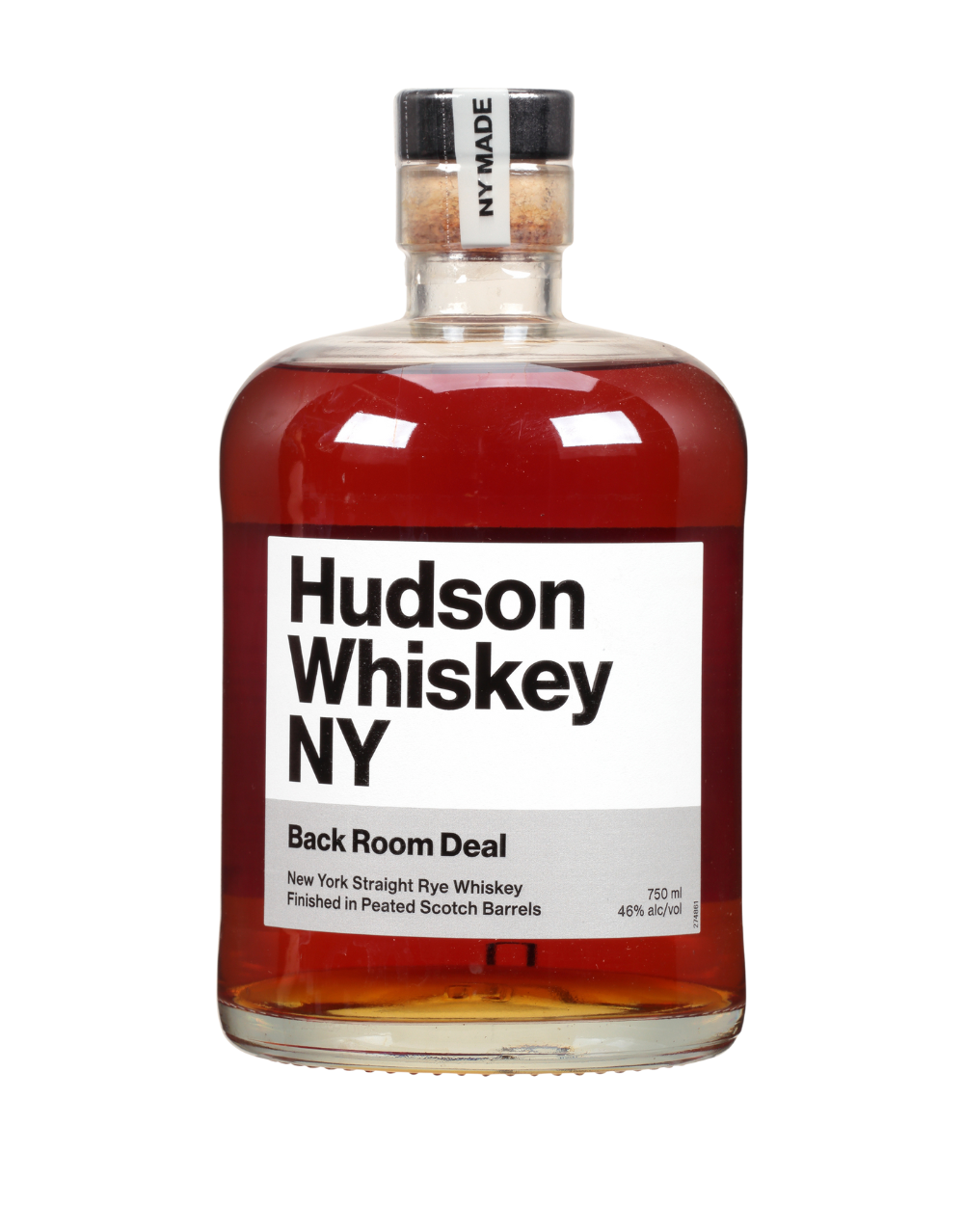
Hudson Back Room Deal Rye ReviewWhere to buy Hudson Back Room Deal Rye — compare online retailers and find local stores near you.
WHERE TO BUY — ONLINE & LOCAL
Quick Facts
Is This For Me?
You want a smoky American rye without reaching for Islay; you like honey and caramel sweetness sitting underneath the smoke rather than fighting it; you want a real 95% rye mash bill at a drinkable 92 proof; or you value that the peat here comes from a documented, traceable cask journey rather than a flavouring.
You want the dill-and-caraway signature of a classic American rye — neither descriptor appears in a single source we checked. You want heavy peat: the smoke is a seasoning, not the main course, and one reviewer flatly wrote "Not spicy. Not peaty." Reviewers also split hard on weight, between "thick and chewy" and "kinda thin."
Flavor Profile at a Glance
What It Tastes Like
Nose
Smoke arrives first — soft, not medicinal — then honey, caramel and vanilla, with apricot and brown sugar rounding it out. One critic adds a pleasant mustiness.
Palate
Rye spice and cinnamon lead, with clove and black pepper behind them and dried fig giving it a dark, sweet edge. The smoke threads through rather than dominating.
Finish
Long for the strength, with the smoke fading slowly against cinnamon and a little sweetness. One reviewer found it short and hot with a menthol edge instead.
Best Ways to Enjoy
Neat
How most reviewers drink it. 92 proof is warm without being aggressive, and the smoke reads cleanest with nothing added.
With Water
A few drops sweeten it noticeably — one reviewer described the mouthfeel turning syrupy — but it also softens the peat. Add sparingly.
On Ice
The brand recommends it, and the chill tightens the sweetness. Expect the smoke to recede as the cube melts.
Cocktail
Best in citrus-forward drinks where the smoke plays against acid. It muddies anything bitter.
Cocktail Scores
Price & Value
The spread on this bottle is unusually wide. We found it at $51.99 at one New York retailer and $74.99 at a California one, with the distillery's own shop at $55. That means the difference between a good buy and a poor one is entirely down to where you shop, not what is in the glass. At $55 it is fair value for a three-year straight rye with a genuinely unusual and fully disclosed cask programme behind it. At $75 it is not — you are paying a novelty premium for a bottle that is not rare. Compare it against the rest of our cask-finished rye whiskeys before you commit.
Bottle Transparency
- DistilleryTuthilltown Spirits Distillery, 14 Grist Mill Lane, Gardiner, New York — New York's first legal distillery since Prohibition, founded 2003. The Hudson brand is owned by William Grant & Sons.
- Grain95% New York rye, 5% malted barley, sourced from New York family farms. Empire Rye certified and Kosher certified.
- MaturationMinimum three years in new charred American oak — enough to carry a "straight" designation, which Hudson uses on the label.
- The FinishHudson's own emptied bourbon barrels are shipped to Scotland, filled with peated Scotch, emptied again, returned to Gardiner and refilled with this rye. The smoke is entirely cask-derived — there is no peated malt anywhere in the mash bill.
- Strength46% ABV / 92 proof. Not cask strength; no batch or barrel number published.
- FiltrationNot disclosed. Hudson publishes no filtration statement for this bottling.
- AwardsDouble Gold, San Francisco World Spirits Competition 2022; Gold, TAG Spirit Awards 2022. Both are paid-entry competitions and we exclude them from the community score.
Full Review: Hudson Back Room Deal
Back Room Deal arrived in September 2020 as part of Hudson's wholesale reinvention — new names, new recipes, new subway-tile labels, and the brand's first genuinely new expression in seven years. That timing matters when you go looking for reviews, because anything written about "Hudson rye" before 2020 is describing a different liquid in a smaller bottle. This one has no pre-rebrand history to confuse it with. What it has instead is a gimmick that turns out not to be a gimmick.
The Smoke Is Borrowed, Not Distilled
The name is a joke about the supply chain, and the supply chain is the product. Hudson empties its bourbon barrels, ships them to Scotland, lets a peated Scotch producer fill and mature whisky in them, takes the barrels back to Gardiner, and refills them with its own straight rye. By the time the rye goes in, the wood has been through three separate lives. There is no peated malt in the mash bill — the mash is the same 95% New York rye and 5% malted barley as the brand's flagship Hudson Do The Rye Thing. Every trace of smoke in the glass is second-hand, absorbed from staves. That is a meaningfully different thing from a peated-grain whiskey, and it explains why the smoke reads as soft and sweet rather than phenolic or medicinal.
Where Reviewers Disagree
Our pool is small, and it is divided on two points. The first is intensity. WhiskyCast's Mark Gillespie found "a hint of peat smoke"; Whisky Advocate's Julia Higgins called it "an undercurrent"; a Distiller reviewer simply wrote "Very smokey"; and another concluded it was "Not spicy. Not peaty. Drinks more like a sweeter bourbon." That is a wide range for a single bottling with no batch variation published. The second is weight. Gillespie's palate note is "thick and chewy." Good Spirits News opens with "light in body." One drinker landed on "kinda thin and medicinal but pretty good." We have scored body at a deliberately non-committal five because the evidence genuinely does not support anything sharper.
The Dill That Isn't There
Here is what nobody found. Across every source we read — brand copy, three published critics and seventeen community tasting notes — the words dill and caraway appear exactly zero times. On a 95% rye that is a real absence and worth naming plainly, because those two descriptors are what most drinkers mean when they say a whiskey "tastes like rye." What you get instead is cinnamon, clove and black pepper on a bed of honey and caramel, with dried fig and raisin adding darkness. It is recognisably a rye, but it is a sweet, baking-spice rye rather than a herbaceous one — closer in character to the gentler end of our high-rye whiskeys than to a classic Pennsylvania-style pour.
Our Verdict
A genuinely interesting bottle with a genuinely thin evidence base. What the sources agree on is that the cask trick works: the smoke integrates rather than sits on top, the sweetness carries it, and the finish is long for 92 proof. What they do not agree on is how much smoke you will actually get, or how substantial the whiskey feels. Buy it if you want something unusual to sit with, and buy it near $55 rather than near $75. It is a curiosity pour rather than a house rye — file it with the best rye whiskeys for sipping rather than the bottle you reach for on a Tuesday.
Community Tasting Notes
Be careful with this number. It rests on only four independent scored sources — sixteen Distiller community ratings plus three published critics — which is below the six we normally require before we treat a figure as settled. Remove the single most enthusiastic critic and it falls from 4.0 to 3.7, a swing of 0.3. Crowd and critics otherwise agree almost exactly, at 3.9 and 4.0 respectively. Treat this as provisional until more reviews exist.
Top Reported Flavors
Rating Distribution
🎁 Whiskey Review Rewards
$10 Gift Voucher — Every Review
Write a real tasting review and we'll send you a $10 digital gift voucher for barware and whiskey accessories on the store. Your honest notes help fellow rye lovers discover new favorites.
"At RyeCentral, we never pay for positive reviews — honest, unbiased opinions matter."
Pros & Cons
Pros
- A smoky American rye that doesn't taste like a Scotch impersonation
- Fully disclosed cask journey — you can trace exactly where the smoke comes from
- 95% New York rye mash bill, well above the 51% legal minimum
- Genuinely long finish for 92 proof; three of four sources call it long
- Empire Rye certified and Kosher certified, with a published minimum age
- Approachable strength — warm rather than hot at 46% ABV
Cons
- Very thin review pool — only four independent scored sources exist
- Reviewers disagree sharply on how much smoke you actually get
- Body splits the room between "thick and chewy" and "kinda thin"
- No dill or caraway anywhere — not a traditional American rye profile
- Street price swings from $52 to $75 for the identical bottle
- No filtration statement and no batch information published
Frequently Asked Questions
❓ Is Hudson Back Room Deal actually a peated whiskey?
❓ What proof is Hudson Back Room Deal?
❓ Is it a straight rye whiskey?
❓ What is the mash bill?
❓ What does "Empire Rye certified" mean?
❓ Is Hudson Back Room Deal good in cocktails?
❓ Is it worth around $60?

Quality You Can Trust

RyeCentral Lab
Tasted it? Get ranked for it.
Every review earns Lab points — climb the ladder from All Rye to Rye Legend. Your first review earns 100 points and $10 store credit — five stars or one.