


James E. Pepper 1776 100 Proof Rye Review
James E. Pepper 1776 100 Proof Rye ReviewWhere to buy James E. Pepper 1776 100 Proof Rye — compare online retailers and find local stores near you.
WHERE TO BUY — ONLINE & LOCAL
Quick Facts
Is This For Me?
You want the classic high-rye signature — mint, bright citrus and cracked pepper — at a genuine 100 proof for under $35. It is one of the better-value bottlings of the widely-shared MGP rye recipe, it is non-chill filtered, and at 50% ABV it has the backbone to carry a Manhattan or a Sazerac instead of vanishing into them.
You want a settled, verifiable spec. The brand changed this bottle's stated mash bill, dropped its age statement and removed the distillation-origin line in 2025 without renaming it, so what is on the shelf today may not be what the reviews describe. Skip too if you want oak depth — at two to three years there is very little, and several reviewers found the body thin and the finish a touch hot.
Flavor Profile at a Glance
What It Tastes Like
Nose
Bright citrus and cracked black pepper lead, with fresh mint and a cool menthol edge running underneath, then clove, a little honeyed sweetness and a light frame of young oak.
Palate
Dense rye bread and black pepper arrive first, chased by orange-and-lemon citrus, clove and a thread of honey. Medium-bodied and lightly oily rather than thick.
Finish
Long and spicy — peppered dark chocolate, more citrus and a dry, faintly bitter oak edge. Reviewers genuinely split on length: five call it long, three medium or shorter.
Best Ways to Enjoy
Neat
Workable but not its best suit. At 100 proof there is real tongue burn, and one reviewer called it “just on the edge of being a little too hot.”
With Water
Helps. A splash evens out the heat and coaxes a little brown sugar forward, though one reviewer found it turned oddly woody.
On Ice
Good. The chill tightens the mint and pepper and takes the edge off the burn without flattening the citrus.
Cocktail
Where it earns its keep. Reviewers are near-unanimous that 50% ABV plus high spice is exactly what a stirred drink wants.
Cocktail Scores
Price & Value
On price this has always been the argument for the bottle. Reviewers writing between 2013 and 2019 consistently paid $23 to $30 for a non-chill-filtered 100-proof rye, and more than one named it the best-value version of the shared MGP recipe on the shelf. Today it sits closer to the low thirties, which is still fair for the strength. The caveat is the one running through this whole page: the spec on the label has moved, so the value judgement those reviewers made was about a liquid that may no longer be in the bottle. If you want the same recipe with a longer track record behind it, Bulleit 95 Rye is the most widely available comparison.
Bottle Transparency
- DistilleryHistorically contract-distilled at MGP in Lawrenceburg, Indiana, then cut to proof and bottled at the James E. Pepper Distillery in Lexington, Kentucky. The brand removed that origin statement from its product page in 2025 and has not replaced it.
- Mash BillContested. The brand's own page said 95% rye / 5% malted barley until early 2025 and says 100% rye now. Retailers and reviewers still print 95%, 90%+ or “over 90%.” We have not found a TTB filing or brand statement explaining the change.
- AgeNo age statement today. The brand previously published “aged 3-4 years”; reviewers who read the label reported “aged over 3 years,” and several estimated 2–3 years.
- MaturationNew charred American oak. No char level or barrel-entry proof published for this bottling.
- FiltrationNon-chill filtered — the one spec the brand has stated consistently across both eras.
- AwardsDouble Platinum, 2024 Fred Minnick Ascot Awards. Note that this is a paid-entry competition, so treat it as marketing rather than independent assessment.
Full Review: James E. Pepper 1776 100 Proof Rye
For most of the last decade this was one of the easiest recommendations in rye. A 95% rye mash bill from MGP in Indiana, bottled at a full 100 proof, non-chill filtered, and priced under thirty dollars. Reviewers kept saying versions of the same thing: that the extra proof gave the shared MGP recipe something the 80- and 90-proof versions lacked, and that nobody was charging craft-distillery money for it. That is a real compliment in a category full of sourced whiskey sold as if it were homemade.
The Problem With This Review
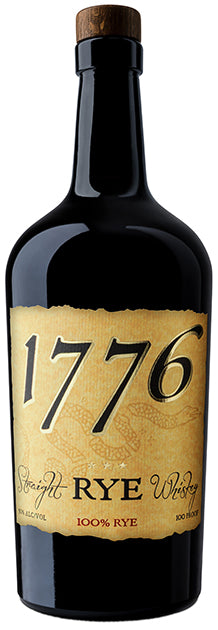
We need to deal with the spec change before the tasting notes, because it affects how much weight any of them carry. Somewhere between January and April 2025, the brand's own page for this bottling stopped saying “95% Rye and 5% Malted Barley in the Mash Bill; Aged 3-4 years; Distilled at the Lawrenceburg Distillery in Indiana” and started saying “100% Rye Mash Bill.” The age statement went. The origin statement went. The product name, the proof and the sensory blurb stayed exactly the same. In September 2026 the brand also swapped in new bottle photography.
None of that is illegal or even unusual — James E. Pepper has been distilling at its own reopened Lexington site since December 2017, and a sourced brand eventually transitioning to house distillate is the expected arc. What is unusual is doing it silently, under the same name and the same proof. The practical consequence for a reader is straightforward: every scored review we could find was published before the change. If the liquid genuinely moved from a three-year MGP 95/5 to a house-distilled 100% rye, then the notes below describe a bottle that may no longer exist. That is why this page is flagged rather than filed away as settled, and it is why we have not asserted a mash bill in the Quick Facts.
What The Older Liquid Tasted Like
On the well-documented version, three descriptors do almost all the work. Citrus is the most-reported note of any kind — orange peel, orange zest, lemon, “heavy citrus” — appearing in seven of our sources across nose and palate. Mint is the second signature, named by four reviewers and pushed further by one into explicit eucalyptus and menthol territory, which is the classic tell of a young, high-rye MGP distillate. Third is the grain itself: rye bread, pumpernickel, “dense bread-like notes,” in five sources.
Around that core sit clove, black pepper, honey and a recurring dark chocolate note on the finish. What is conspicuously light is oak. At two to three years there is not much wood to speak of, and reviewers say so — “modest wood notes,” “light touches of oak,” “slight mouth-drying tannins.” Dill, the descriptor most people expect from an MGP rye, shows up in only two of our sources. That is a genuine absence worth naming: if you are buying this expecting the pickle-brine profile that MGP rye is stereotyped for, several reviewers did not find it here. The rest of the category sits in our high-rye whiskey collection.
Where Reviewers Disagreed
Two things split the panel. The first is body. One reviewer calls it “thin,” another “modest,” while a third found it “thick and oily” and a fourth registered a “full mouthfeel.” Medium is the honest middle. The second is finish length: five sources say long, three say medium or short. On a bottling with no age statement and batch-to-batch variation that spread is plausible rather than contradictory.
Heat is the one complaint that recurs without much disagreement. At 100 proof it bites, and one critic put it as “just on the edge of being a little too hot.” That is also precisely why it works in a drink. If you want the same brand turned up rather than down, the barrel-proof version of this rye is the sibling bottling — though one reviewer who tried both concluded the extra fifteen dollars was not worth it.
Our Verdict
A well-made, honestly priced, spice-and-citrus rye that has always been better in a glass with other things in it than on its own. On the strength of the older liquid it is an easy four-star cocktail bottle and a three-star sipper, which is roughly where the community lands it. We are holding this review open rather than closing it because the brand changed the specification without changing the name, and until someone tastes the current bottling against the old one, nobody can honestly tell you whether the reviews still apply. For a spice-forward rye where the paperwork is not in question, Rittenhouse Bottled-in-Bond is the shelf standard.
If you are buying primarily to mix, our best rye whiskeys for cocktails guide covers the rest of the field.
Community Tasting Notes
This score rests on twelve independent scored sources and roughly 510 crowd ratings across all aggregators. Remove the single largest pool and the figure moves from 3.3 to about 3.2, so it is a stable number. The important caveat is not sample size but vintage: essentially all of these reviews predate the brand's 2025 change to this bottle's stated mash bill, age and origin, so they describe the older liquid.
Top Reported Flavors
Rating Distribution
🎁 Whiskey Review Rewards
$10 Gift Voucher — Every Review
Write a real tasting review and we'll send you a $10 digital gift voucher for barware and whiskey accessories on the store. Your honest notes help fellow rye lovers discover new favorites.
"At RyeCentral, we never pay for positive reviews — honest, unbiased opinions matter."
Pros & Cons
Pros
- A full 100 proof, non-chill filtered, usually under $35
- Distinct mint-and-citrus signature; citrus is named by 7 of 12 sources
- Strong rye-bread and pepper backbone that survives vermouth and bitters
- Repeatedly called the best-value version of the widely-shared MGP rye recipe
- Honest pricing — the brand never charged craft money for sourced whiskey
- Widely distributed and easy to find
Cons
- Mash bill, age and distillate origin all changed on the brand's page in 2025 with no rename
- Effectively every published review predates that change
- Very little oak depth at two to three years
- Heat runs hot for the proof; one critic called it borderline too hot
- Body divides reviewers between “thin” and “full” — expect medium
- A 92-proof European release exists under the same name; check the label abroad
Frequently Asked Questions
❓ What proof is James E. Pepper 1776 Rye?
❓ What is the mash bill of James E. Pepper 1776 Rye?
❓ Is James E. Pepper 1776 Rye sourced from MGP?
❓ How old is James E. Pepper 1776 Rye?
❓ Is James E. Pepper 1776 Rye good in cocktails?
❓ Does James E. Pepper 1776 Rye taste like dill?
❓ Is James E. Pepper 1776 Rye worth around $30?

Quality You Can Trust

RyeCentral Lab
Tasted it? Get ranked for it.
Every review earns Lab points — climb the ladder from All Rye to Rye Legend. Your first review earns 100 points and $10 store credit — five stars or one.