


Widow Jane American Oak Aged Rye Review
Widow Jane American Oak Aged Rye ReviewWhere to buy Widow Jane American Oak Aged Rye — compare online retailers and find local stores near you.
WHERE TO BUY — ONLINE & LOCAL
Quick Facts
Is This For Me?
You want a rye that leans orchard-and-tropical rather than peppery — pineapple, apricot and orange peel are the through-line across every panel we read. You like sweetness in a rye and don't need weight. You mix a lot, and want something at 91 proof that survives vermouth without shouting. And you don't mind paying a little for Brooklyn provenance and limestone-water proofing.
You want classic American rye. Dill appears in exactly one of our sources — and that reviewer flagged it as a surprise — and caraway appears in none at all. The wood can land hard and bitter for some tasters, the mash bill is never disclosed, and the bottle is being quietly retired: Widow Jane's current range is Paradigm Rye and Apple Wood Aged Rye, with no page for this one.
Flavor Profile at a Glance
What It Tastes Like
Nose
Orange peel and honey lead, with cardamom sitting just behind and a genuine tropical fruit lift — pineapple, dried mango — that several panels register independently. Caramel fills in underneath.
Palate
Maple syrup and vanilla arrive first, then apricot and a dry almond note. New oak is unmistakable and, for some tasters, assertive — it is the entire point of the bottle.
Finish
Medium to long, dry and grain-forward, with white pepper and a woody, faintly bitter edge. Reviewers split on whether that dryness is refreshing or a letdown.
Best Ways to Enjoy
Neat
Perfectly pleasant. Five of our sources use some version of "enjoyable sipper" — the heat is mild for 91 proof and the fruit carries it.
With Water
A few drops help if the oak reads bitter for you. Much more than that and the tropical fruit — the most distinctive thing here — starts to disappear.
On Ice
Works well. The chill tightens the sweetness and pushes the white pepper forward, which is arguably an improvement.
Cocktail
The strongest case for the bottle, and the one the brand itself made: "a good bitter, or a splash of vermouth or ginger beer goes a long way."
Cocktail Scores
Price & Value
At fifty dollars this competes with a deep bench of straight ryes carrying real age statements, and it does not win on maturity — the minimum here is two years, and the oak character comes from staves rather than from time. What you are actually paying for is a flavour profile almost nothing else on the shelf offers: a rye that tastes of pineapple and apricot. Whether that is worth the premium is a taste question, not a value question. One complication worth knowing: prices have drifted upward and stock has thinned as the bottle winds down, so if you like it, this is not a bottle to wait on. For more conventional value in the same bracket, our sub-100-proof rye whiskeys have several steadier options.
Bottle Transparency
- DistilleryWidow Jane Distillery, 218 Conover Street, Red Hook, Brooklyn, New York. Widow Jane blends and bottles on site; the origin of the rye distillate in this bottling is not stated on the label.
- GrainUndisclosed. "Mostly rye grain and a touch of barley" is the most specific description the brand ever published. No percentages have been released.
- MaturationOnce-used 10-year bourbon barrels with fresh-cut new American oak staves inserted. Minimum two years, per the brand's own copy and Distiller's database record.
- WaterProofed with limestone mineral water from the Rosendale mines in Ulster County, New York — the shared signature across the entire Widow Jane range.
- FiltrationNon-chill filtered and uncoloured. Whiskybase's bottle record confirms both, and one retailer notes visible sediment in the bottle.
- Legal class"Whiskey Distilled from a Rye Mash" — not straight rye. The stave regime rules that designation out. One major retailer describes it as a four-year straight rye; that claim is not supported anywhere else and we do not repeat it.
- Current statusWithdrawn from the brand's published line-up. Widow Jane's site now lists Paradigm Rye and Apple Wood Aged Rye as its rye range, with no page for this expression. Retail stock is still moving.
Full Review: Widow Jane American Oak Aged Rye
Widow Jane's argument about rye is a real one, and it is worth stating in the brand's own words: "When rye comes off the still it is sweet, grassy, and floral. A traditional 'spicy' characteristic all come from the barrel." Everything about this bottle follows from that. Rather than let a barrel do the work over five or six years, Widow Jane put fresh-cut American oak staves inside once-used 10-year bourbon barrels and gave the distillate a minimum of two years. The intent was to reach a particular flavour quickly. The intent worked; whether you want the result is a separate question.
A Rye That Tastes Like Fruit
The most consistent finding across our sources is that this does not taste like American rye. It tastes tropical. Pineapple, dried mango, apricot, orange peel and raisin recur from the Beverage Testing Institute's panel through to Flaviar's 107 customer ratings, and the brand's own descriptor — "a light, tropical summer rye" — turns out to be accurate rather than promotional, which is rarer than it should be. Maple and vanilla sit underneath, and white pepper arrives late. It is a genuinely distinctive profile.
What is missing is as telling as what is there. Dill — the single most characteristic descriptor of American rye — appears in exactly one of our sources, and that reviewer flagged it as unexpected ("pickles with dill, I've never had that before"). Caraway appears in none. On a whiskey distilled from a rye mash, that is a real absence and worth naming plainly: if the rye signature is what you are shopping for, this is not the bottle. Sagamore Spirit Double Oak is the better comparison if you want an oak-driven rye that still tastes like rye.
Where the Wood Divides People
Stave-driven extraction is fast, and fast is not the same as integrated. Our reviewers split cleanly on this. Whisky Monster found the oak "worked pretty well" and praised the balance; a Whiskybase reviewer hit "an astonishingly strong woody note" on the palate and "bitter wood" on the finish; Embrace the Bourbon liked everything until the finish, which they called "very dry" with a nutty, almond-biscuit dryness that "makes you really thirsty." That is not disagreement about quality so much as different tolerances for raw new oak. If you are sensitive to it, taste before you commit to a bottle.
The body question is similar. The Beverage Testing Institute called it "more lithe and nimble than expected for Whiskey made from Rye"; a Flaviar customer wrote that it sits "on the sweeter and lighter end of Rye" and wished the spice gave it more of an edge. At 91 proof there is enough structure that it never reads thin, but nobody describes this as a big whiskey. Ninety-one proof is doing quiet, useful work here — see our other oak-forward rye whiskeys for how differently that strength can be deployed.
The Thing You Actually Need to Know
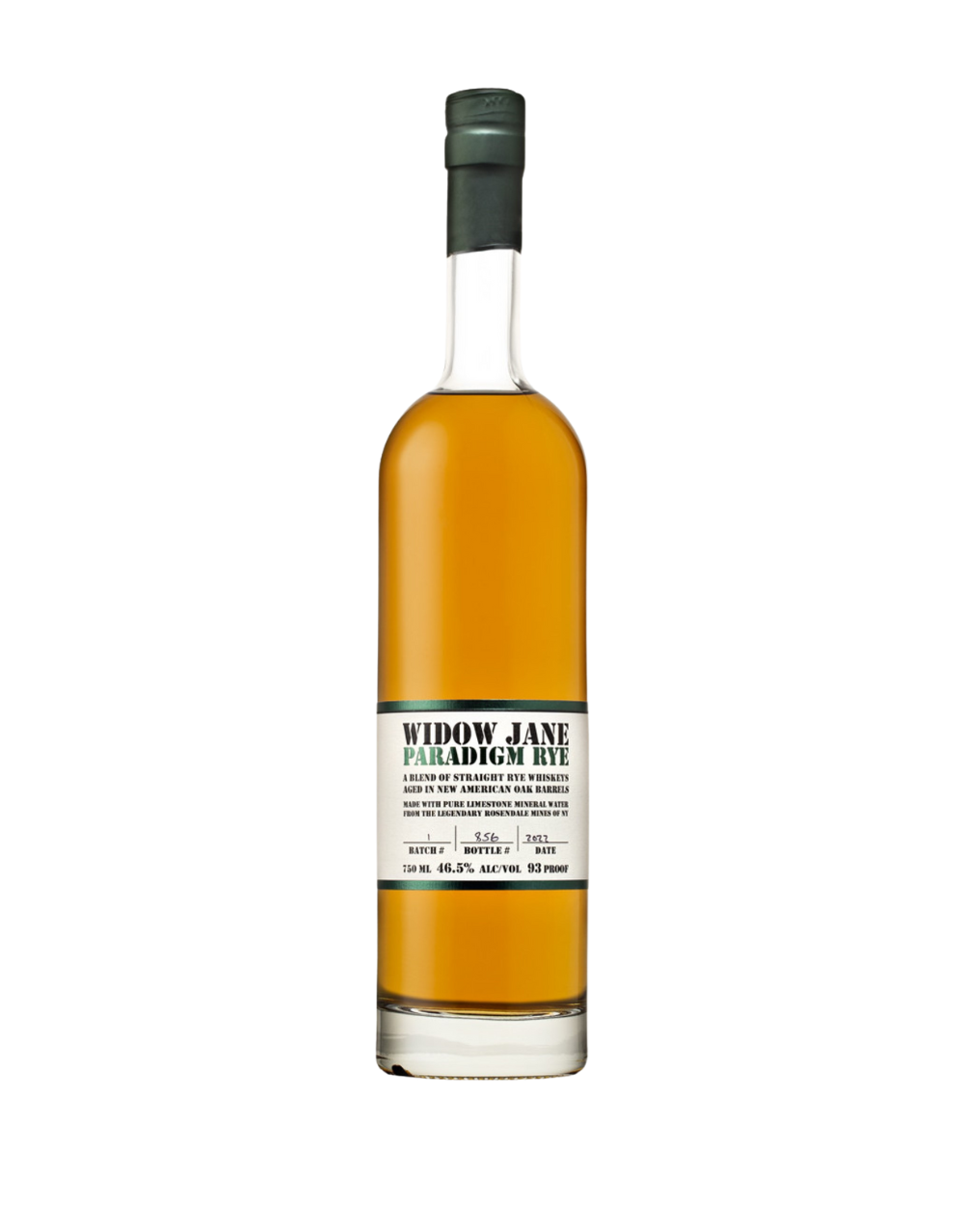
This expression is on its way out. Widow Jane's website no longer carries a page for it; the rye range is now Paradigm Rye and Apple Wood Aged Rye, both at 93 proof. More awkwardly, the brand's own Paradigm page currently points its "order online" link at the retailer listing still titled American Oak Aged — and at least one major retailer has published Paradigm-era copy ("minimum four-year-old straight rye," "blended five barrels at a time") underneath the old product name. We could not reconcile those claims with the brand's long-standing two-year, rye-and-barley description, so we have not used them. Check the front label before you buy, and treat any review you find online as needing the same check.
Our Verdict
A likeable, unusual, slightly awkward whiskey. The fruit is real and genuinely hard to find elsewhere; the wood is divisive; the transparency is poor even by sourced-whiskey standards; and the bottle is being retired while its retail listings quietly disagree about what is inside. Buy it if the tropical profile appeals and you mix — it earns its keep in a glass with bitters, and our best rye whiskeys for cocktails collection has more in that vein. Do not buy it expecting a rye that tastes like rye.
Community Tasting Notes
Be careful with this figure. It rests on seven independent scored sources — a thin pool, and one dominated by a single retailer panel of 107 ratings. Remove that panel and the score falls from 3.8 to about 3.6, a swing of roughly 0.2, which is right at the edge of what we treat as stable. Critics scored this a little below drinkers once both scales were normalised, a gap of about 0.3. Several review pools also mix this bottling up with Widow Jane's Oak & Applewood Aged rye; we excluded every source we could not positively identify.
Top Reported Flavors
Rating Distribution
🎁 Whiskey Review Rewards
$10 Gift Voucher — Every Review
Write a real tasting review and we'll send you a $10 digital gift voucher for barware and whiskey accessories on the store. Your honest notes help fellow rye lovers discover new favorites.
"At RyeCentral, we never pay for positive reviews — honest, unbiased opinions matter."
Pros & Cons
Pros
- A genuinely unusual tropical-fruit profile — pineapple and apricot on a rye
- 91 proof gives it structure without heat; "very smooth" is the common verdict
- Non-chill filtered and uncoloured, confirmed on the bottle record
- Excellent mixer — the brand's own bitters-and-vermouth advice holds up
- Brand copy is honest about what it is doing and why
- Widely liked: 44% of the largest customer panel rated it four stars
Cons
- Almost no classic rye signature — dill in one source, caraway in none
- New-oak character reads raw or bitter for a meaningful minority of tasters
- Mash bill never disclosed; distillate origin not stated on the label
- Two-year minimum age at a price that buys real maturity elsewhere
- Withdrawn from the brand's current line-up; stock is thinning
- Retailer listings now contradict each other on age and legal class
Frequently Asked Questions
❓ What is the difference between Widow Jane American Oak Aged and Oak & Applewood Aged?
❓ What proof is Widow Jane American Oak Aged?
❓ Is this a straight rye whiskey?
❓ How old is it?
❓ What is the mash bill?
❓ Is Widow Jane American Oak Aged discontinued?
❓ Is it good in cocktails?

Quality You Can Trust

RyeCentral Lab
Tasted it? Get ranked for it.
Every review earns Lab points — climb the ladder from All Rye to Rye Legend. Your first review earns 100 points and $10 store credit — five stars or one.